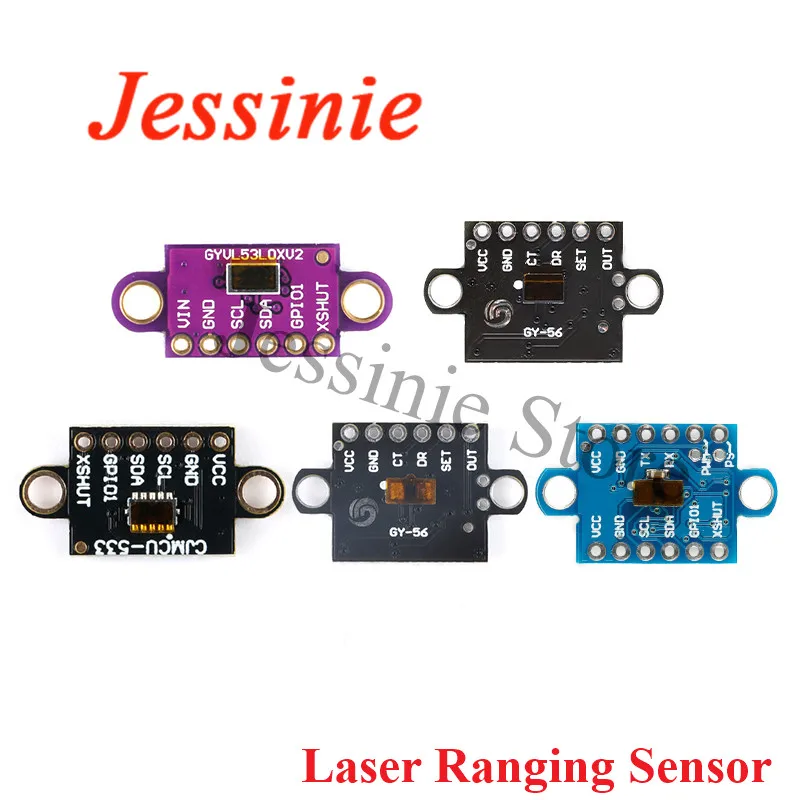

Color
Descripción
3. The serial output mode is divided into two types, one continuous output and one query output. The frequency of continuous output varies according to the measurement mode. For details, refer to the description of the meaning of Byte6. The form of the query output is that after the module receives the query command, the module starts a measurement, and returns one frame of measurement data after the measurement is completed. Different output modes and different measurement modes result in different current consumption of the module. In the query and IIC mode, the overall power consumption of the module will be lower than the automatic output mode of the serial port (the longer the measurement interval is within 2 s, the lower the power consumption), and if no operation is performed beyond 2S, the module will enter the low power mode. The current is approximately 1mA.
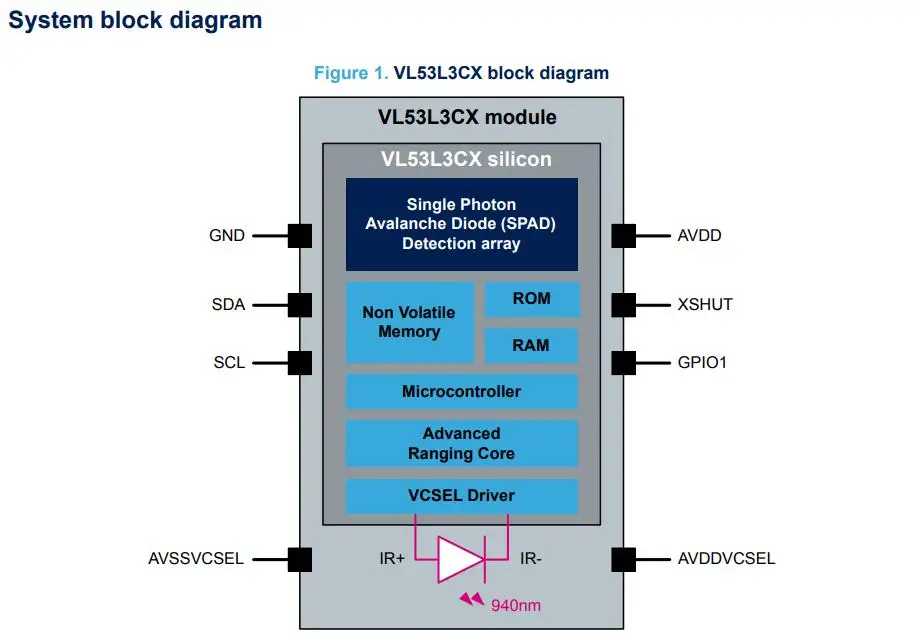
VL53L3CX combines high-performance proximity and ranging sensors with multi-target distance measurement and automatic smudge correction functions. The miniature reflowable package integrates a single photon avalanche diode (SPAD) array and physical infrared filter to achieve the best ranging performance under various ambient lighting conditions, and is equipped with various cover glass windows. The VL53L3CX combines the advantages of a high-performance proximity sensor, excellent short-distance linearity, and distance measurement capabilities up to 3 m. VL53L3CX can also detect different objects in the field of view (FoV) through deep understanding. Allows the crosstalk immunity of the cover glass to exceed 80 cm, and has a dynamic smudge compensation function.
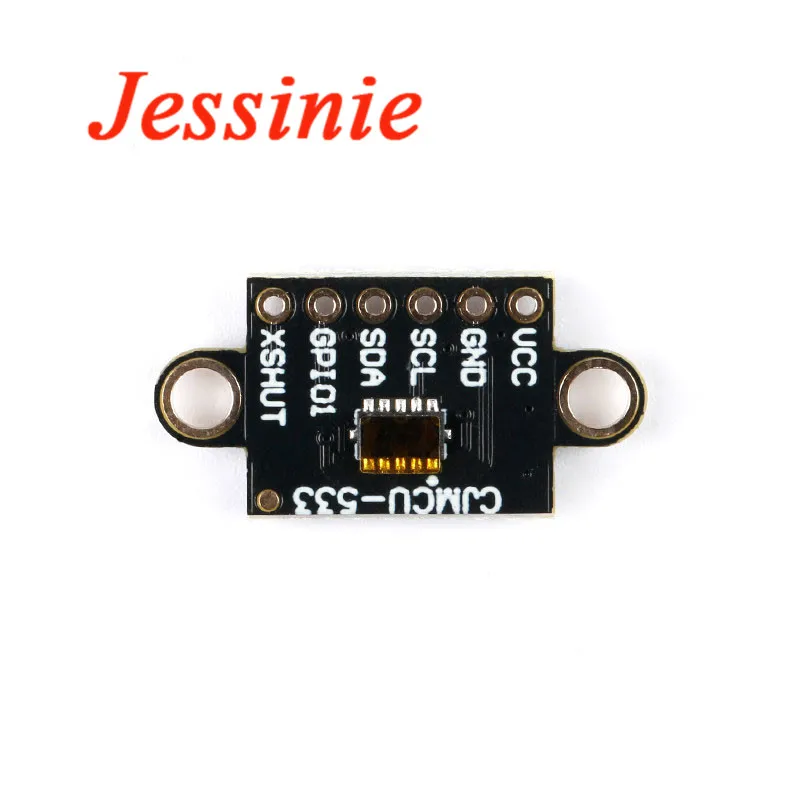
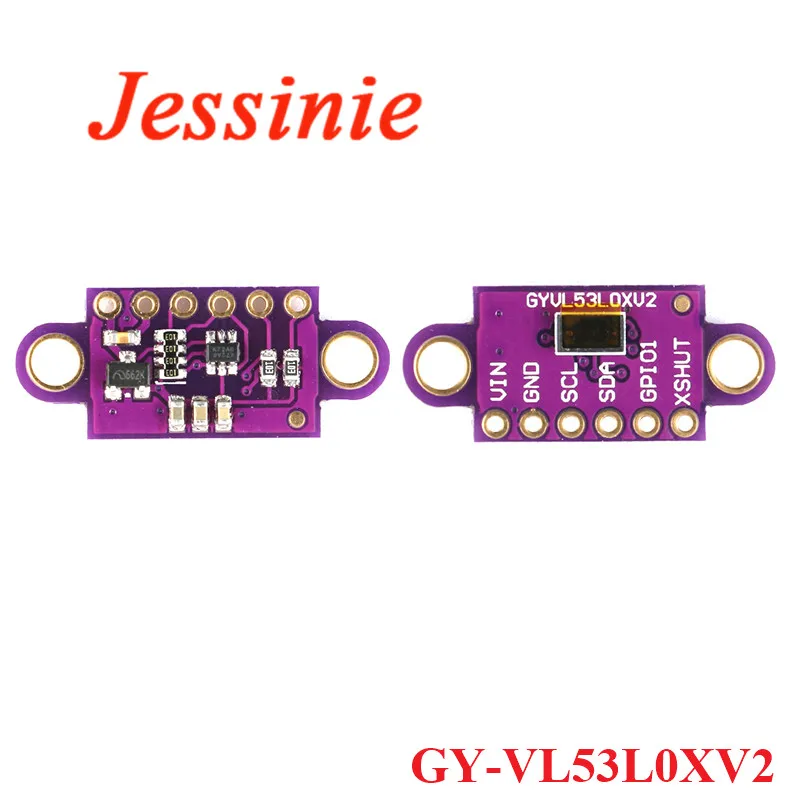
GY-VL53L0XV2
The VL53L0X time-of-flight range sensor is a new generation of laser ranging module. The VL53LOX is a fully integrated sensor with embedded infrared, human eye safety laser, advanced filters and ultra-high speed photon detection array for longer distances, speed and Higher precision.
The sensing capability of the VL53L0X can support a variety of functions, including gesture sensing or proximity detection for various innovative user interfaces, obstacle detection and collision avoidance systems for sweeping robots, service robots, home appliance sensing panels, and laptop users. Detection or power switch monitors, as well as drones and Internet of Things (IoT) products.Product Parameters:Working Voltage: 3 ~ 5V
Communication method: IIC
Measuring absolute distance: 2m
Xshutdown (reset) / GPIO (interrupt)
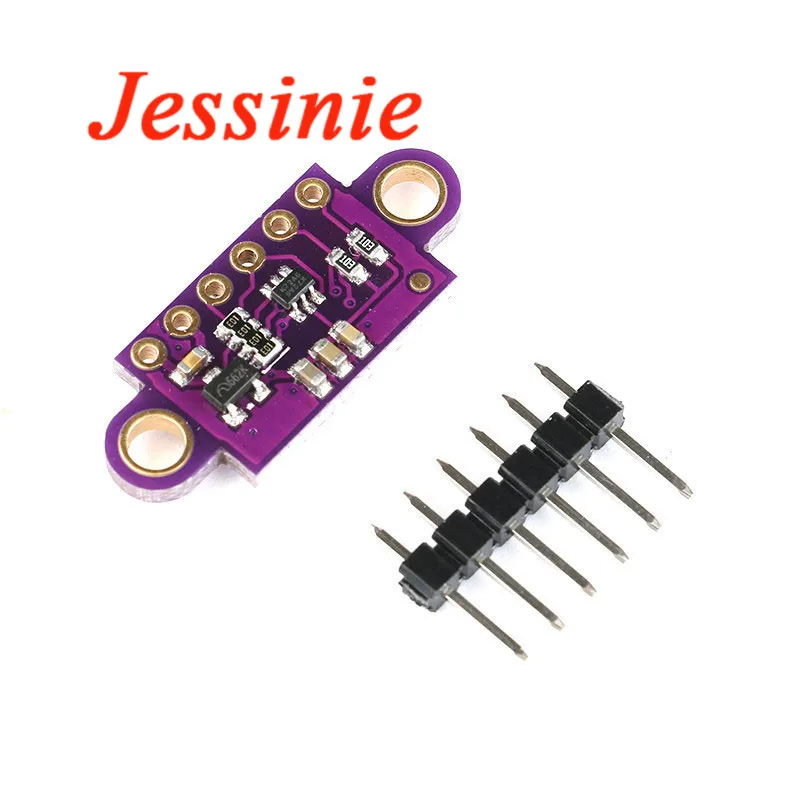
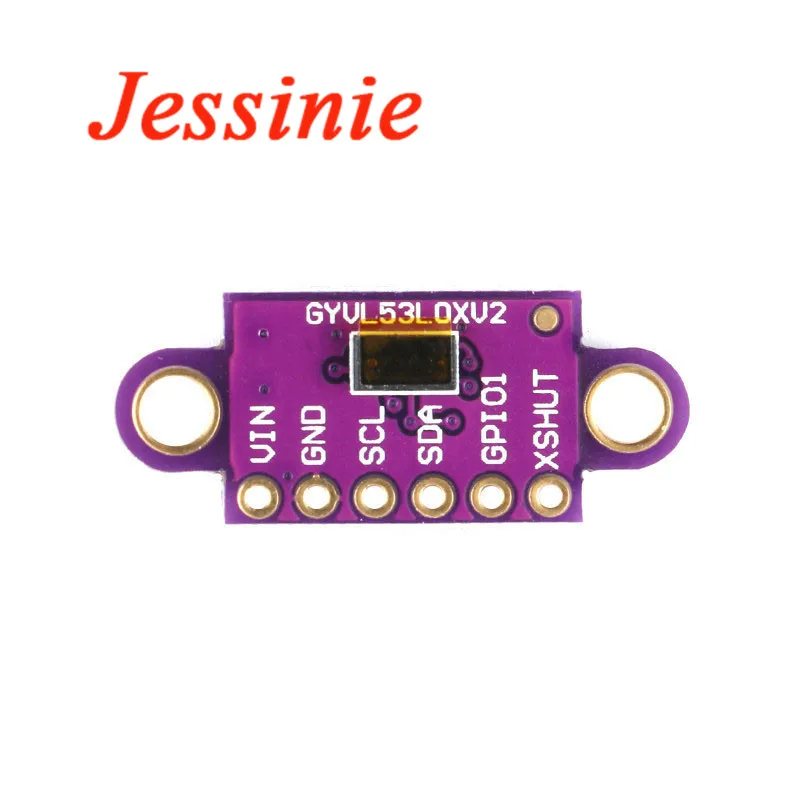
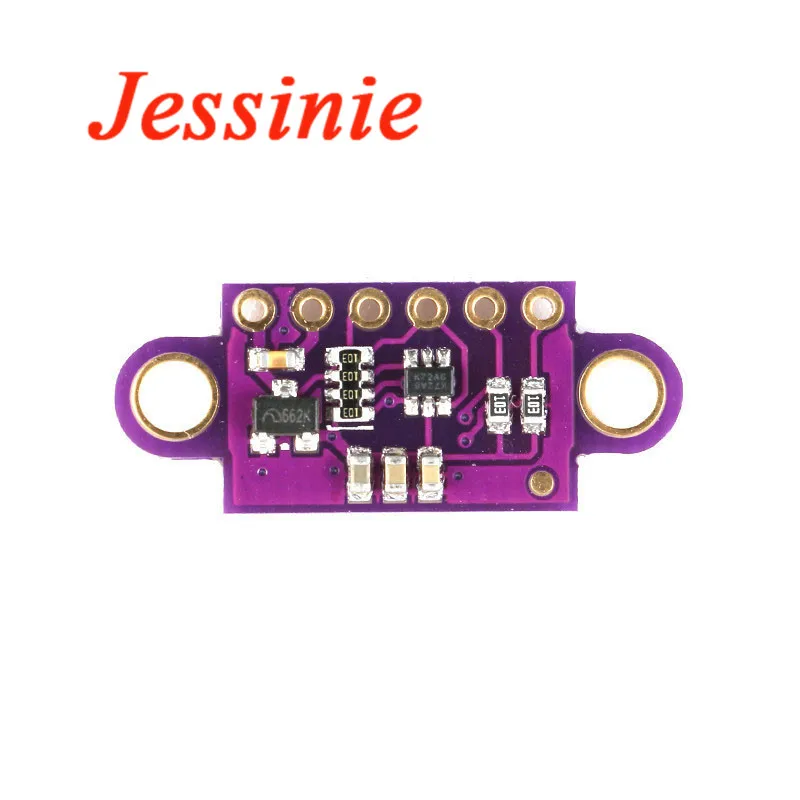
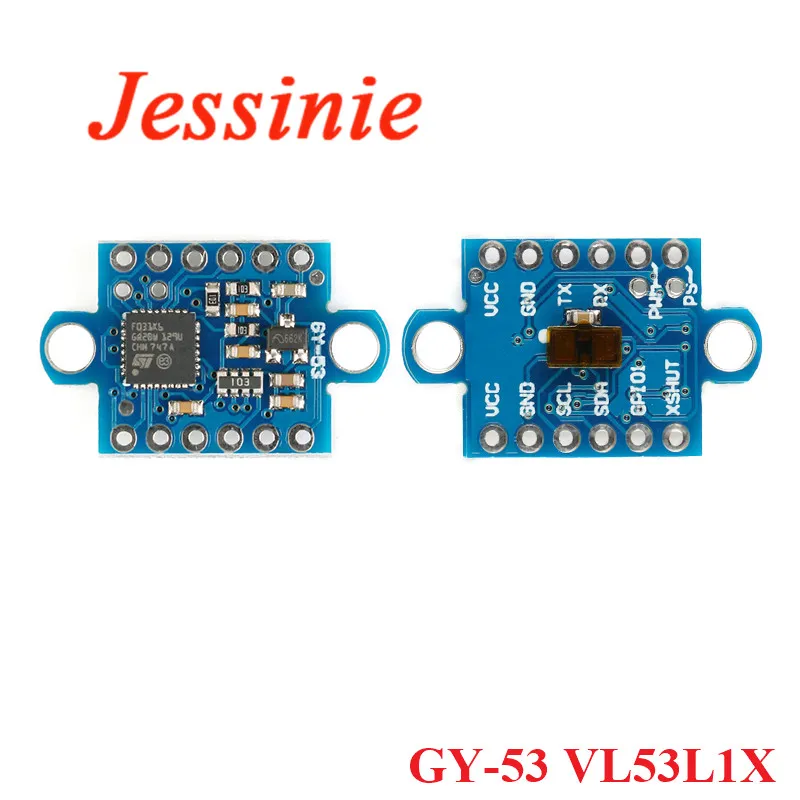
GY-53 VL53L1X
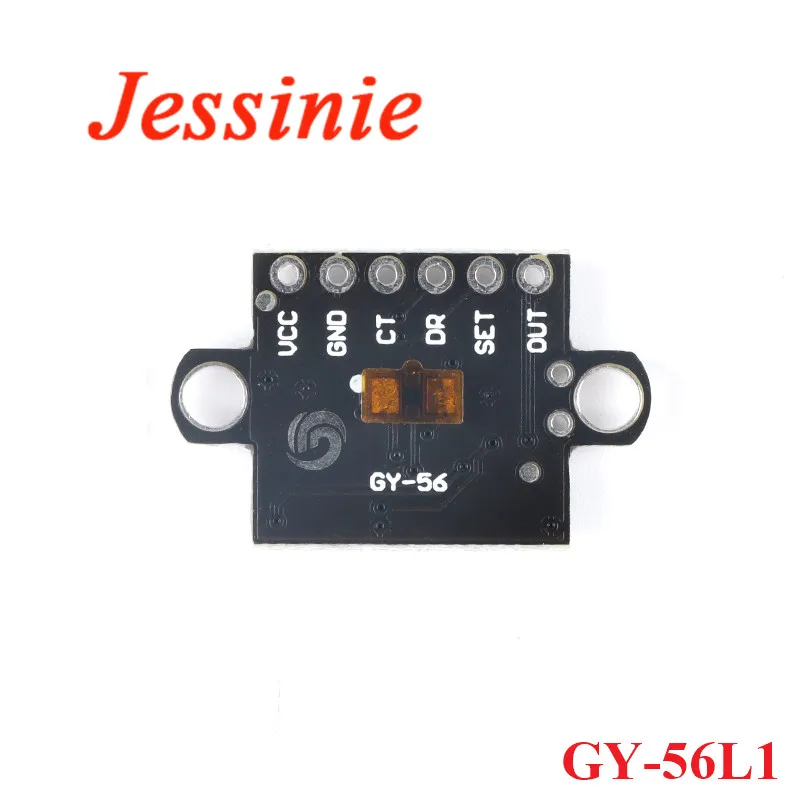
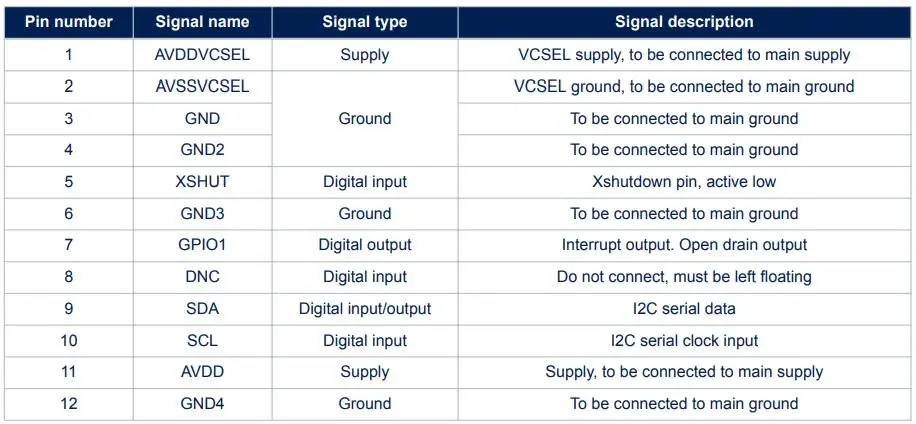
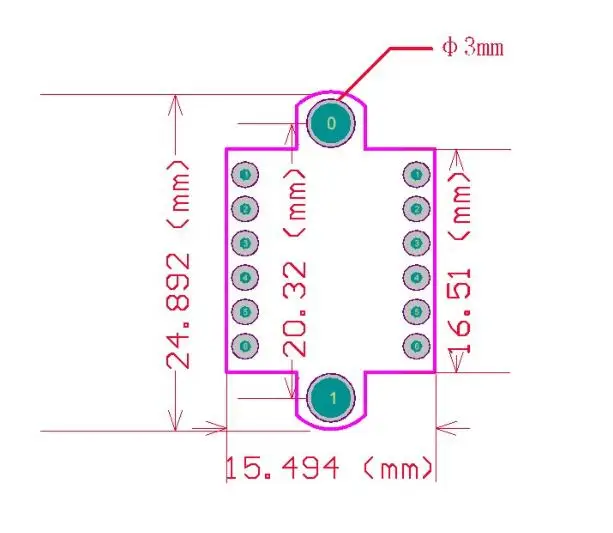 Pin Description: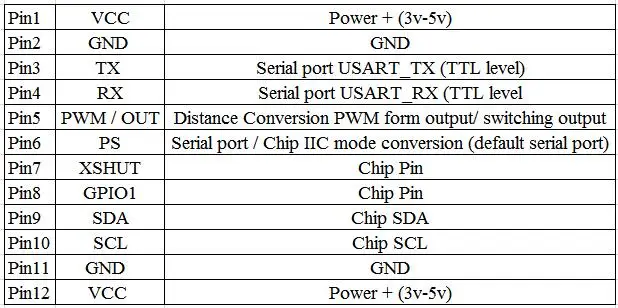
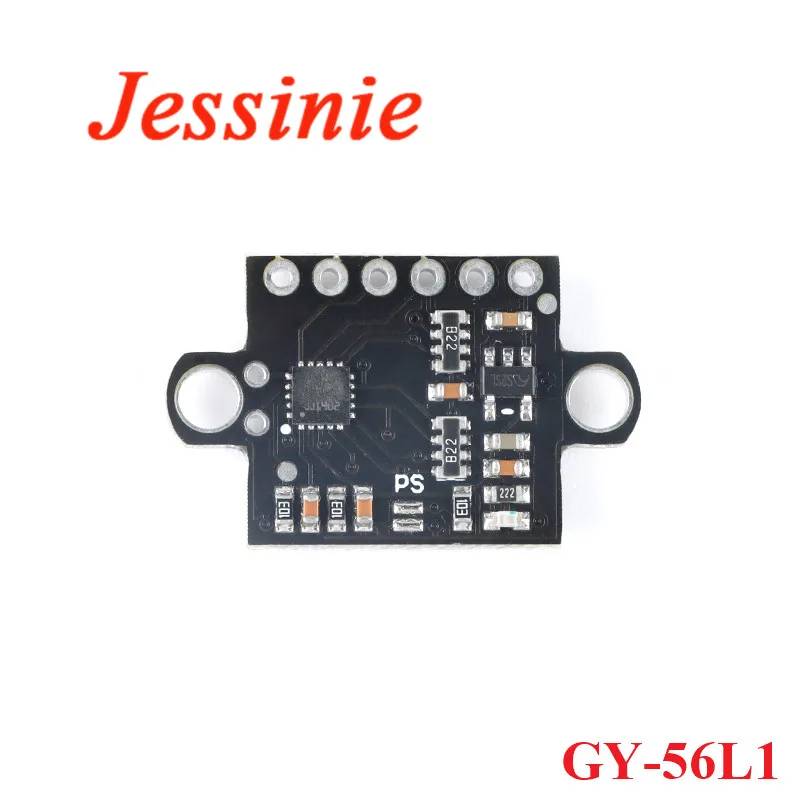
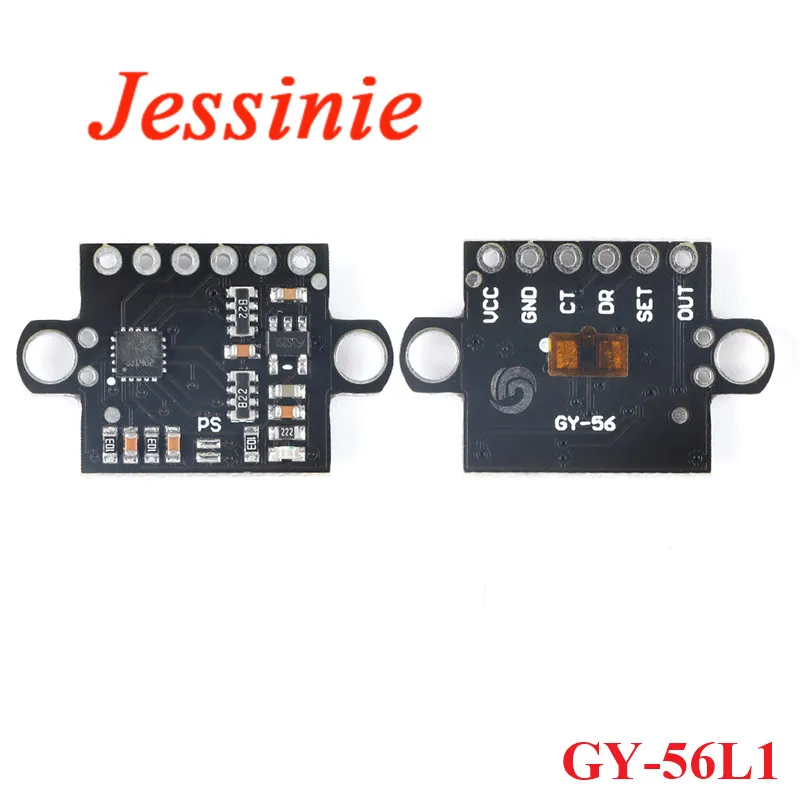
GY-56L1 VL53L1X
Technical Parameters
Measuring range: 0-4 meters (dark light, long distance mode)
Response frequency: 55ms (fast measurement mode)
Working voltage: 3~5 V
Working current: 15~35mA
Working temperature: -20°~ 85°
Storage temperature: -40°~ 125°
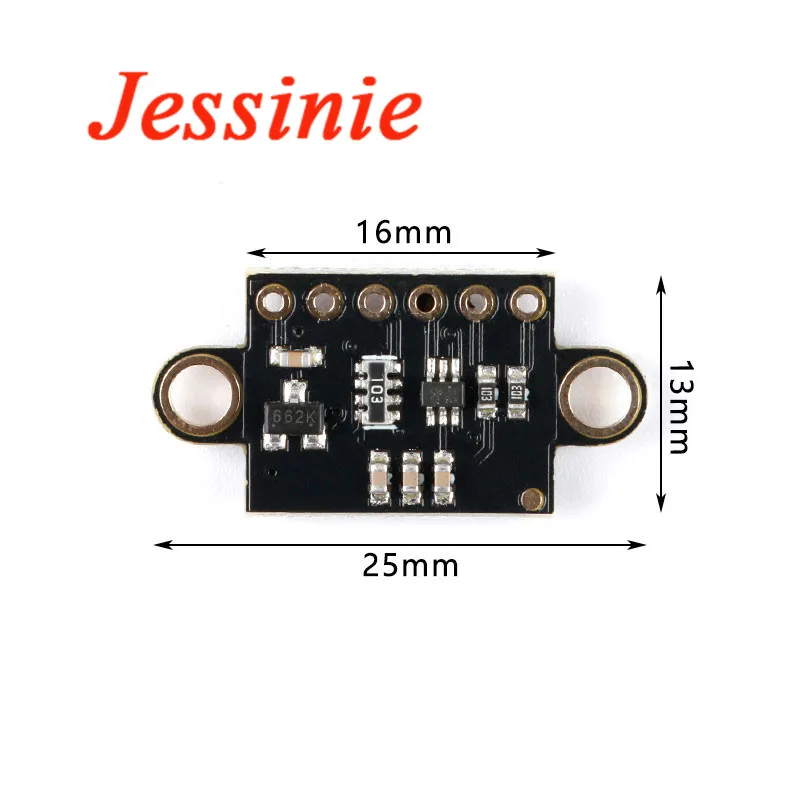
Size: 25mm × 15.6mm
Sensor chip: VL53L1X
Characteristics
High cost performance
Built-in MCU calculation distance
IIC, serial communication format
With the corresponding PC software
Application
Smart robot
Teaching laboratory equipment
Production line product testing
Infrared ranging
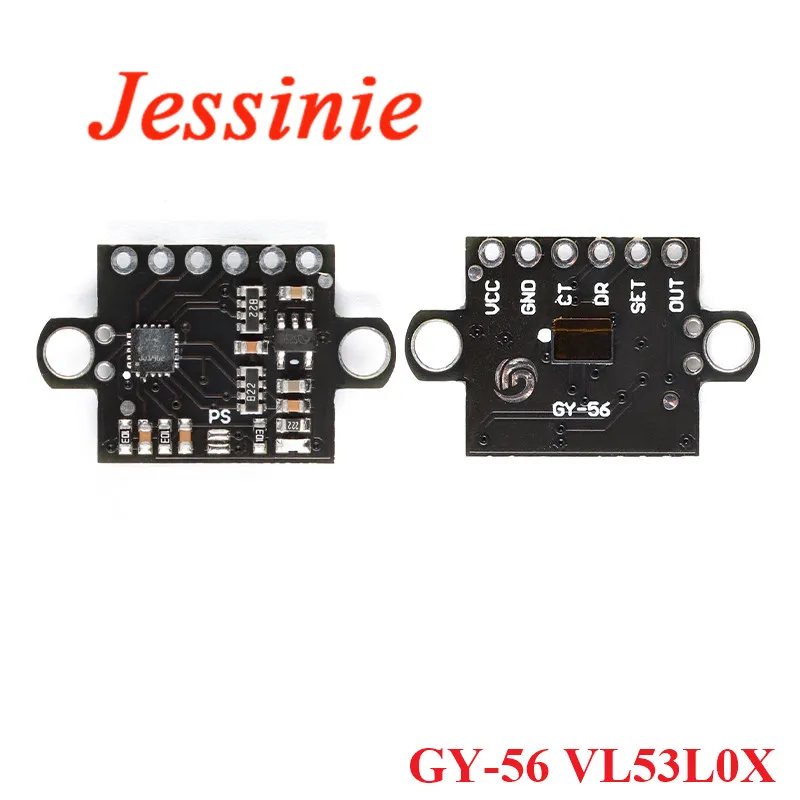
Pin Description
VCC: Power + (3v-5v)
GND: Power Ground GND
CT: Serial port USART_TX/IIC_SCL
DR: Serial port USART_RX/IIC_SDA
SET: Set the upper and lower limit distance alarm value (voltage 0~3.3V)
OUT: Alarm value status output
Note: PS solder joints on the edge of the module, PS solder joint hardware selection module working mode
Ps=1 (default, solder joint open) Serial port UART mode, Pin3 is TX, Pin4 is RX, TTL level
Ps=0 (solder on solder) IIC mode, the user can read the distance data according to the given protocol
Module Usage
1. The module is a serial port and an IIC output module, and the module defaults to serial port mode. After the module is connected to the power supply, the detection distance is not within the upper threshold. The LED will flash for 1 second. The detection distance is within the upper threshold. The LED indicator will be on. If the indicator is blinking, the module fails to initialize and the module cannot be used.
2. Serial port mode (default): PS port is pulled high (default, PS solder joint is open), the module is powered on. The default configuration is baud rate 9600, medium distance measurement mode, and measurement time is 100ms. It is convenient to use the host computer of this module. Make corresponding settings for the module; please select the port and baud rate before using the host computer, and then click the “Open Serial Port” button. When the module outputs data automatically, the host computer will display the corresponding data.
3. The serial output mode is divided into two types, one continuous output and one query output. The frequency of continuous output varies according to the measurement mode. For details, refer to the description of the meaning of Byte6. The form of the query output is that after the module receives the query command, the module starts a measurement, and returns one frame of measurement data after the measurement is completed. Different output modes and different measurement modes result in different current consumption of the module. In the query and IIC mode, the overall power consumption of the module will be lower than the automatic output mode of the serial port (the longer the measurement interval is within 2 s, the lower the power consumption), and if no operation is performed beyond 2S, the module will enter the low power mode. The current is approximately 1mA.